
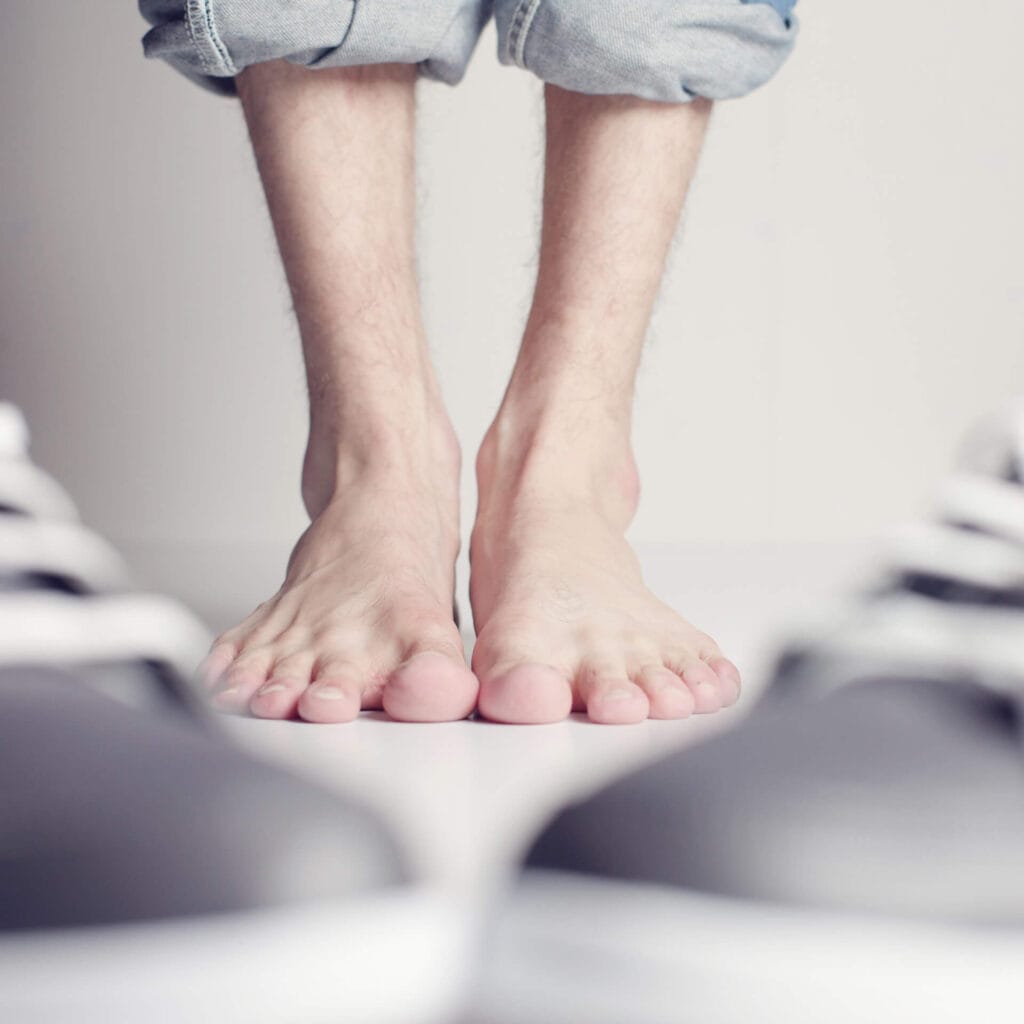
Is walking barefoot good for you?
Is walking barefoot good for you?
One topic that can provoke a lot of debate, is whether walking barefoot is good for you or not.
Well, the answer to that question is really, yes and no! It depends on the person and the circumstances. Generally, yes, walking barefoot can be beneficial, but there are some caveats.
Benefits of walking barefoot
- Barefoot walking allows joints, muscles and tendons to work in a different way to how they would normally function with the support of footwear. This can help with muscle strength, as the muscles and joints themselves are working without the help that the cushioning and shape of a shoe would give.
- Walking barefoot will give different feedback to the nerve endings in the feet than walking in shoes would give. This stimulation to the nerves can help with proprioception (knowing where your joints are) and balance.
- Walking without footwear gives your feet room to breathe. It takes away pressure from enclosed footwear, which can exacerbate bunions, corns and calluses. It can also help to prevent conditions such as Athlete’s Foot, which thrives in warm, dark and damp environments (just like inside shoes!).
What are the risks of walking barefoot?
- If you are diabetic, have neuropathy, reduced circulation, immunosuppression, or suffer with conditions such as Raynaud’s, then barefoot walking is best avoided. Footwear offers protection and support, for example, protection from stepping on sharp objects, or catching bare feet on furniture etc.
- Reduced sensation caused by neuropathy means that you may not feel any damage to the feet, and reduced circulation means that any cuts or scrapes may take longer to heal. Immunosuppression can mean that any damage to the skin is at higher risk of infection. In conditions such as Raynaud’s, footwear can offer thermal protection, which reduces the occurrence of chilblains.
- Footwear offers protection from infections such as verrucae and athlete’s foot. In communal areas such as changing rooms and swimming pools, it is advisable for everyone to wear protective footwear.
- Footwear offers cushioning and support. Barefoot walking can exacerbate conditions such as Plantar Fasciitis, and for those with forms of hypermobility, it can remove the support that footwear gives and can exacerbate joint strain in some circumstances.
How to walk barefoot safely
- Increase the time you walk barefoot gradually. Start off with 10-15 minutes at home, then build on this. Your joints and muscles will be used to functioning in a certain way, aided by footwear. Removing this support too quickly can lead to joint strain.
- Choose your terrain carefully. If walking barefoot in the home, ensure that your floors are clear of any small, or sharp objects. If walking barefoot outside, softer surfaces are recommended as these are more forgiving, e.g. grass or sand.
- Avoid walking barefoot in communal areas.
For any help or advice regarding your feet, why not get in touch with us here, or you can book an appointment with us here.

Anna Conway
BSc (Hons), MCPod, SRCh, PGcert Podiatry
Owner, Lead Podiatrist